Mini, Midi or Maxi? How to pick the right bead size
Mini (2.5 mm), midi (5 mm) or maxi (10 mm)? See the difference in size, age, color range and time – and which bead size to choose.
Three sizes, three completely different experiences
Hama (and similar brands like Nabbi and Pyssla) sell beads in three main sizes: Mini, Midi and Maxi. They look similar on the package, but give wildly different results — and suit different ages and projects.
The practical measurements
- Maxi: 10 mm diameter, 9 mm tall — big, for the smallest hands
- Midi: 5 mm diameter, 5 mm tall — standard, "the regular one"
- Mini: 2.5 mm diameter, 2 mm tall — tiny, for detailed projects
Maxi: The big ones
Maxi is double the size of Midi. Perfect for kids ages 3-5 who can barely coordinate their fingers yet, and perfect for big decorative pieces where you want something substantial without taking weeks.
Plus: finished quickly, easy to handle, grown-up-friendly.
Minus: less detail, fewer colors available, the motif
looks coarse.
Midi: The standard right one
Midi is the standard — 90% of all bead art and YouTube tutorials revolve around Midi. Suits everyone from age 6 and up. Best balance between detail, speed and availability.
Plus: the widest range of colors (all 89 Hama colors), available everywhere, lots
of patterns online, works for figures and large art pieces alike.
Minus: none, if you're over 6.
Mini: The small ones for detail
Mini beads are only half the size of Midi. Best for ages 9-10 and up — fingers need to be very precise. In return, you can make incredibly detailed images that look like real mosaic.
Plus: artistic precision, same motif fits in less
physical space, "wow" factor when people see the finished piece.
Minus: takes 4× as long as Midi (same dimensions),
fewer colors, needs good lighting and patience.
Colors and boards in each size
The number of Hama colors and the board size differ:
| Size | Bead | Hama colors | Standard board |
|---|---|---|---|
| Maxi | 10 mm | 31 | 16×16 beads |
| Midi | 5 mm | 89 | 29×29 beads |
| Mini | 2.5 mm | 79 | 57×57 beads |
See every color in the Hama color code list.
Comparison: same motif, three sizes
A 29×29 motif — say a small blue fish — becomes:
- In Maxi: 29 cm × 29 cm. As big as a small book. Done in 30-45 min.
- In Midi: 14.5 cm × 14.5 cm. Like a little canvas. Done in 1-1.5 hours.
- In Mini: 7 cm × 7 cm. Postcard-sized. Done in 3-4 hours.
What should I pick if I'm not sure?
Midi. It's not for nothing that it's the standard. You get the widest color selection, you can find most patterns, and the result looks great without taking the whole weekend.
On Perleland.dk you can pick which size your pattern should be tailored to upfront. The tool adjusts colors and resolution automatically — so you get a pattern that's actually buildable with your beads.
Read next
- Hama bead color codes – all 89 colors with number and name
- How to iron perler beads – temperature, time and baking paper – step by step
- Bead art with kids – what can children do at each age?
Patterns that work in all sizes
These motifs look great whether you pick Mini, Midi or Maxi:
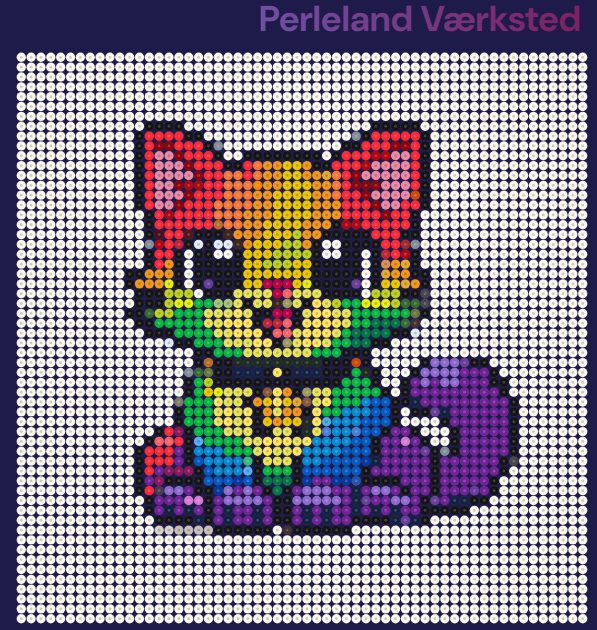 Rainbow cat
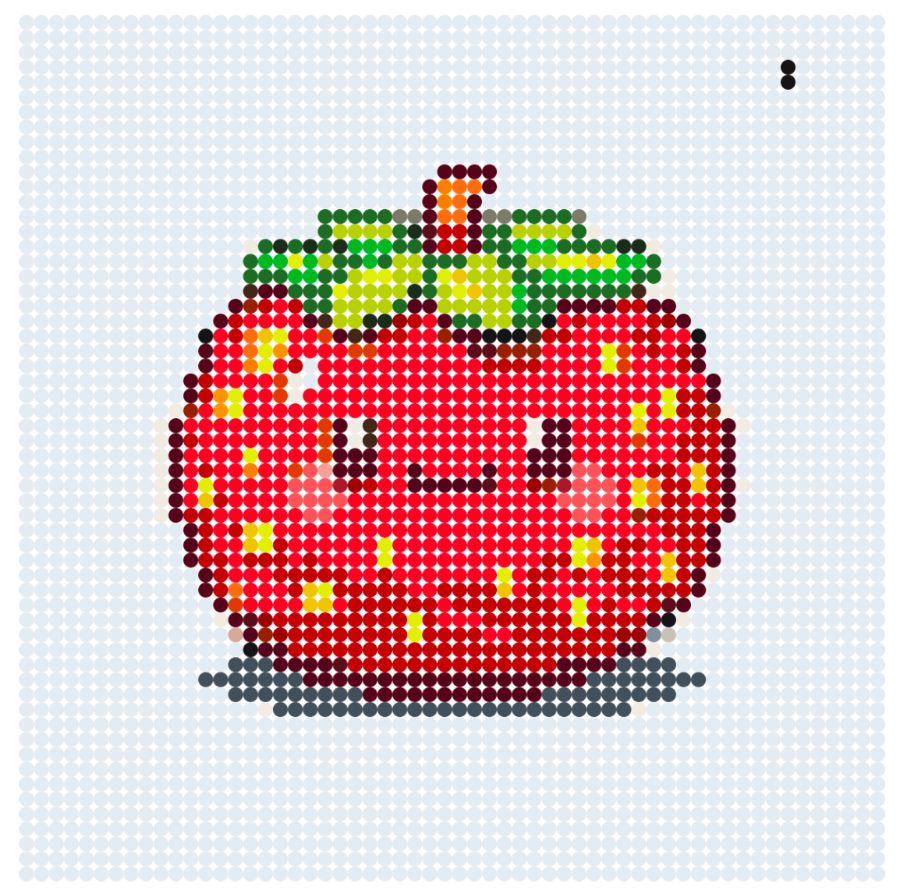 Cute smiling strawberry
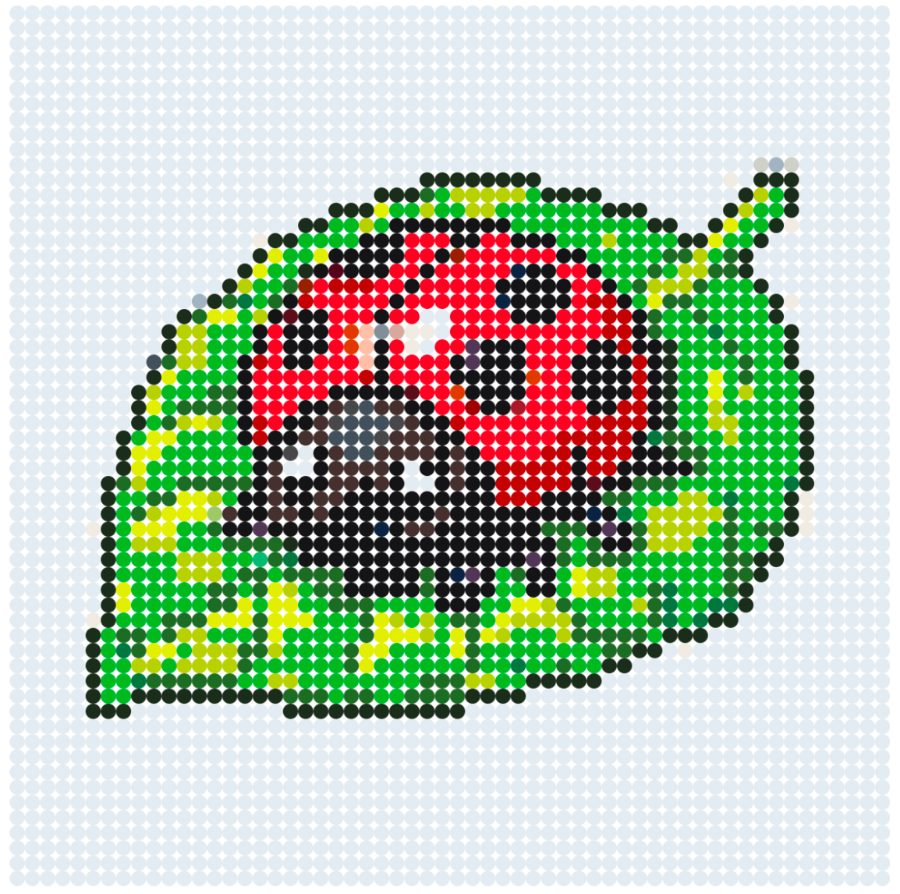 Ladybird on a green leaf