Hama bead color codes: The complete overview
Get to know the Hama bead color codes — from H01 (white) to H116 (midnight blue). Practical overview of the most-used codes, specials and the pastel palette.
What are Hama color codes?
Hama beads have a numbering system: each color has its own number, called an "H-code." When you print a bead pattern from Perleland, the code is shown in each little square — so you know exactly which bead goes where, even if you print in black and white or have forgotten what the color is called.
Why is it smart to know the codes?
- You can order replacement beads precisely (especially when you need a specific color)
- You can share a pattern with a friend without color translation getting lost
- You can print in black and white and save ink — all the info is in the code
The most popular Hama colors
Most households have a starter set of 15-30 colors. Here are the most popular:
- H01 — White
- H02 — Cream
- H03 — Yellow
- H05 — Rose
- H06 — Pink
- H07 — Purple
- H09 — Light blue
- H12 — Brown
- H15 — Clear blue
- H18 — Black
- H21 — Light brown
- H22 — Red
- H35 — Neon red
- H37 — Neon green
- H47 — Dark green
- H53 — Dark blue
Special colors (glitter, neon, glow)
Hama also makes special series that delight kids especially:
- H56 — Glow in the dark (red)
- H61 — Gold glitter
- H62 — Silver glitter
- H64 — Pearl
- H115 — Clear green (transparent)
- H116 — Midnight blue
The pastel palette — a favorite for many
Pastel colors have become extremely popular in recent years. Hama has a whole series:
- H96 — Pastel lilac
- H102 — Pastel rose
- H105 — Pastel orange (apricot)
- H108 — Eggplant
- H111 — Dark powder
- H112 — Powder
How to use the codes with Perleland
When you make a pattern on Perleland.dk, you can decide upfront which exact Hama codes you have at home. The tool then only uses those — and you avoid having to buy a new color just because the motif "requires" one you don't have.
It's a small check that makes a big difference: print the PDF, and you have a precise "shopping list" with count and code for every single color.
Do I need to buy all the codes?
No! Most patterns use 10-20 colors. Start with a basic set and expand over time. If you make a lot of patterns, you'll slowly build a library — and it becomes more and more flexible with every bag you add.
See the colors in action
These patterns show how nicely the color codes work together:
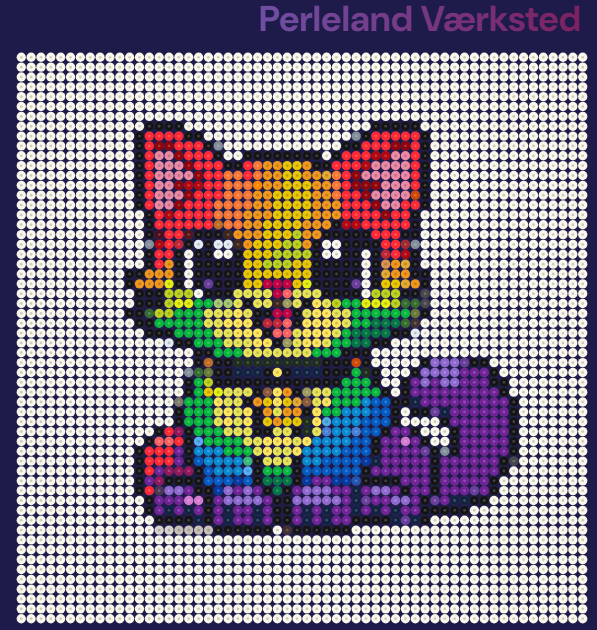 Regnbuekat
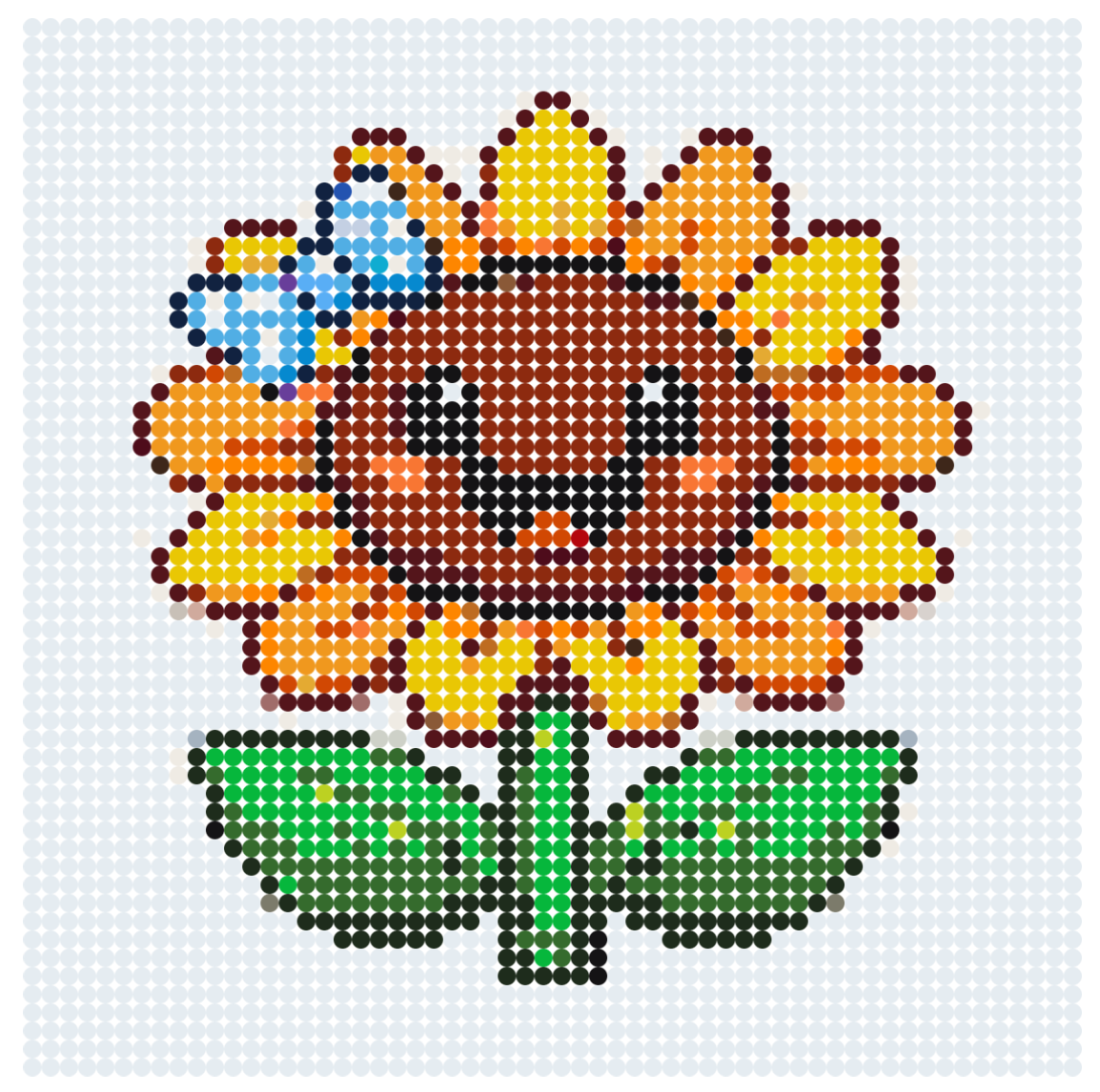 Glad solsikke med smil
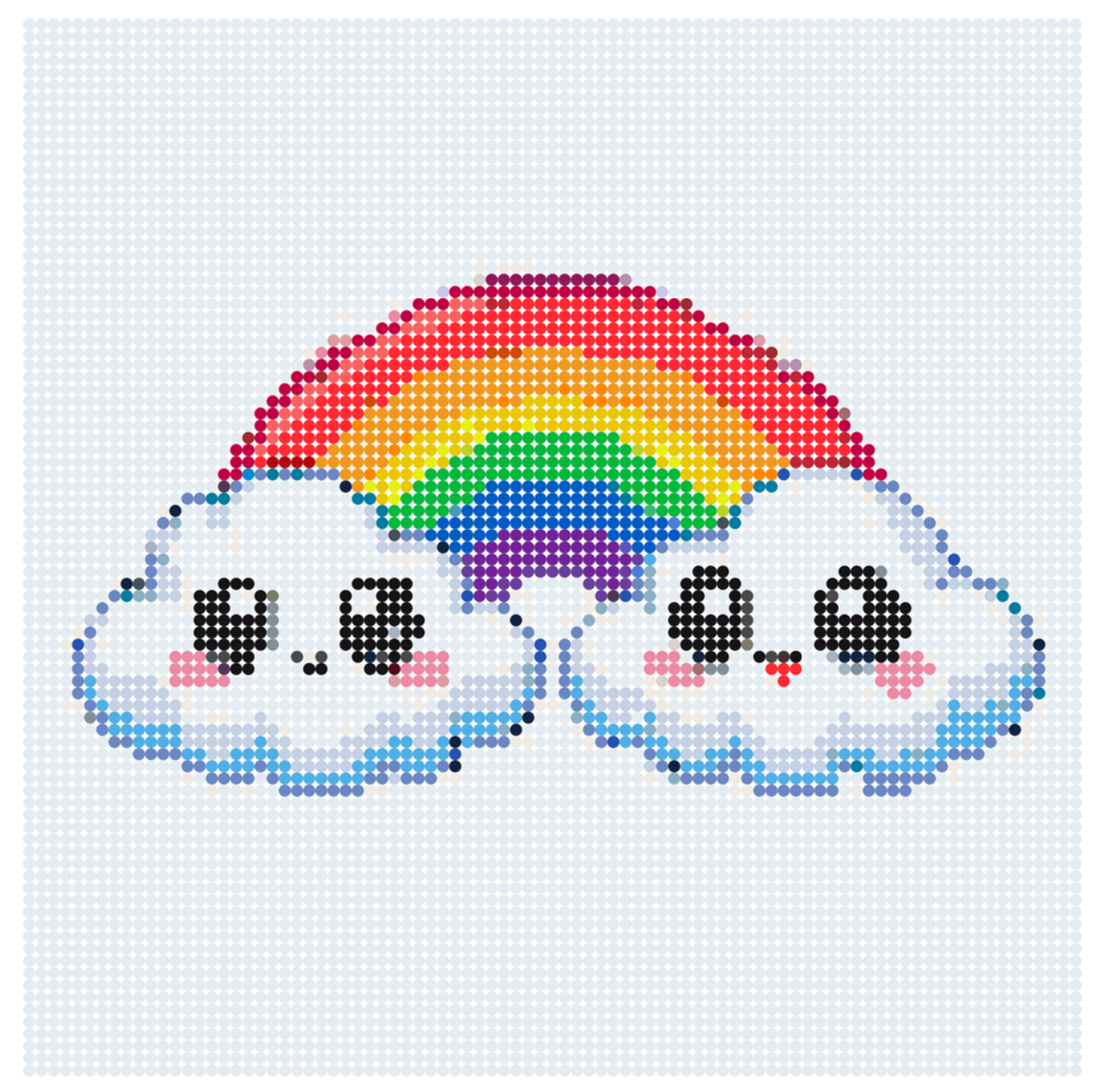 Regnbue med skyer